
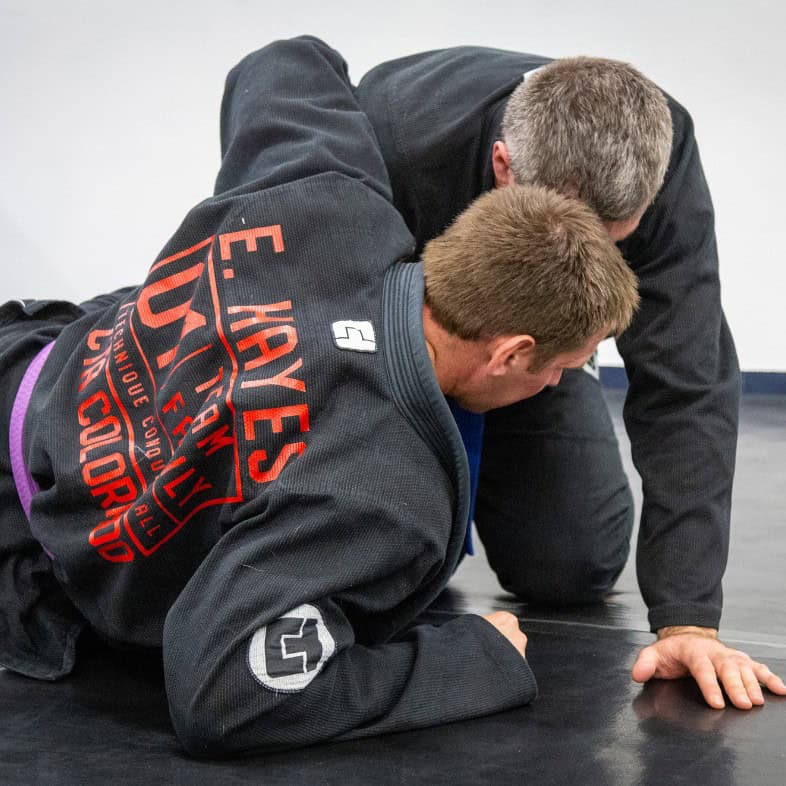
Sometimes the obstacle isn’t the thing itself. It’s everything we pile on top of it.
That thought came to me during one of our youth Brazilian Jiu-Jitsu classes yesterday. We have a young man at the academy who recently turned seven years old and moved into one of our older classes. He is, quite honestly, one of those kids that every instructor enjoys having around. He’s polite, cheerful, hardworking, and respectful. He’s the type of child who says “yes sir” and “no ma’am” without being reminded. He’s the kind of student who brightens a room simply by being in it.
But yesterday, something was a bit different.
As I was teaching class, I noticed an interaction between him and his parents from across the room. I didn’t hear every word, and I don’t know exactly what led up to it, but I saw enough to recognize that he was frustrated. More importantly, I saw him respond to his mom and dad in a way that I had never really seen before. He was rude. He was disrespectful. It was completely out of character for him.
As an instructor, moments like that can be challenging. Not because the child is bad—he isn’t—but because you suddenly have to decide how to handle the situation. Do you come down hard on the child? Do you make an example out of the behavior? Do you ignore it and move on? Every teacher, every parent, and every coach eventually faces moments like these. The truth is that children are human. They have emotions. They have bad days. They get frustrated. Sometimes they make poor decisions. The reality is that adults do too.
As I watched the situation unfold, I realized something important. The young man was already struggling. He was already frustrated. His parents were already trying to help him. The situation was already uncomfortable. There was no need for me to pile additional weight onto what he was already carrying.
So instead of calling him out directly, I paused class and spoke to everyone.
I explained that there is a difference between disagreeing and being disagreeable.
We are not always going to agree with people. In fact, there are plenty of times in life when we shouldn’t. Children won’t always agree with their parents. Students won’t always agree with their teachers. Athletes won’t always agree with their coaches. Adults won’t always agree with their spouses, coworkers, friends, or family members. Disagreement is a normal part of life. It isn’t something to fear or avoid.
What matters is how we handle those disagreements.
You can disagree respectfully. You can communicate your feelings. You can express frustration. You can even advocate for yourself. What you cannot do is allow your emotions to become an excuse for treating people poorly. Being upset does not give us permission to abandon respect. Being frustrated does not justify being rude.
As I reflected on the interaction later and this morning, I realized how often this lesson extends far beyond children. In fact, most adults struggle with this exact same concept.
How often do we make situations harder than they need to be?
Think about it. Someone gives us feedback, and instead of listening, we become defensive. A coach corrects our technique, and instead of learning from it, we feel embarrassed. We face a challenge at work, and instead of focusing on the solution, we spend our energy worrying about everything that could go wrong. We have a disagreement with someone we care about, and instead of working through the issue, we allow pride and emotion to make the situation bigger than it ever needed to be.
The original challenge is rarely what overwhelms us.
What overwhelms us is everything we pile on top of it.
A difficult conversation becomes a personal attack. A simple mistake becomes proof that we’re failing. A setback becomes a disaster. A bad day becomes a bad week. We take a problem that weighs ten pounds and somehow turn it into something that weighs one hundred.
Brazilian Jiu-Jitsu teaches this lesson every single day.
One of the most common mistakes beginners make is trying too hard. They squeeze too hard. They push too hard. They force techniques that aren’t there. They exhaust themselves trying to overpower every situation. If you’ve ever watched a brand-new student roll for the first time, you’ve seen it. They use every ounce of strength they have for a few short minutes and then collapse in exhaustion.
Then something interesting happens as they gain experience.
They begin to relax.
They stop fighting battles they don’t need to fight.
They learn when to move and when to wait.
They learn efficiency.
They learn patience.
Most importantly, they learn that success often comes not from doing more, but from doing less.
The techniques haven’t changed. The positions haven’t changed. The opponent hasn’t changed. What changes is the student’s ability to remove everything that is unnecessary.
Life works the same way.
Many of us spend years creating resistance where none needs to exist. We convince ourselves that every challenge requires a battle. We try to control every outcome. We feel the need to win every argument, prove every point, and defend every opinion. Before long, we find ourselves exhausted, not because life is impossibly difficult, but because we’ve attached so many unnecessary emotions, expectations, and fears to every situation.
The interaction between the little boy and his parents in class reminded me of that.
His challenge wasn’t really what his parents had asked him to do. His challenge was how he chose to respond to it. Had he simply communicated his frustration respectfully, the situation likely would have passed in a matter of seconds. Instead, emotions got involved, and those emotions made the situation bigger than it needed to be.
The good news is that this is a lesson we can all learn from.
The next time you find yourself frustrated, take a moment and ask yourself a simple question: What am I adding to this situation that doesn’t belong here?
Am I adding pride?
Am I adding assumptions?
Am I adding fear?
Am I adding frustration?
Am I making this problem bigger than it really is?
Sometimes the answer is yes.
And when it is, we have an opportunity to lighten the load.
One of the greatest lessons martial arts offers is the understanding that strength isn’t always about applying more force. Often, true strength comes from restraint. It comes from patience. It comes from emotional control. It comes from the ability to remain respectful when we are frustrated and calm when things don’t go our way.
That young man is still one of the most wonderful kids at Otomi Martial Arts. One difficult moment doesn’t change that. In fact, moments like these are often where the greatest growth occurs. After all, character isn’t built when everything is easy. Character is built when we’re challenged and have to decide how we’re going to respond.
The same is true for all of us.
Life is already going to provide enough obstacles. Brazilian Jiu-Jitsu is already going to challenge us. Parenting, work, relationships, and personal goals all come with their own difficulties. We don’t need to make them harder by piling unnecessary weight on top.
So I’ll leave you with the same question I asked myself after class yesterday and this morning:
Where are you making things harder than they need to be?
You might discover that the obstacle standing in front of you isn’t nearly as large as you thought. It may simply be hidden beneath all the extra things you’ve chosen to carry.
And if you can learn to set some of that weight down, you may find that moving forward becomes a whole lot easier.